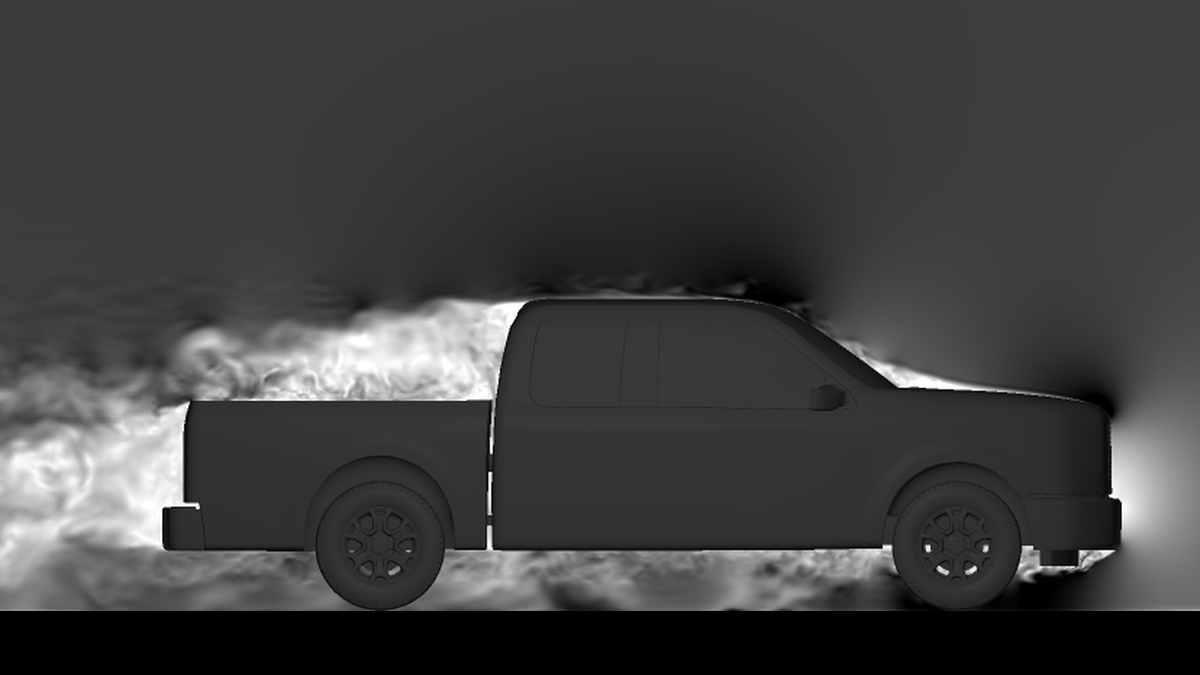
Automotive design studios can spend months defining a vehicle’s proportions, surfaces, and visual character before receiving aerodynamic feedback from engineering. The resulting concepts then move through successive rounds of simulation, surface refinement, and wind-tunnel testing to meet performance targets. The stakes are high in an industry where traditional OEMs often require 48 to 54 months to develop a new model, and where, at highway speeds, more than half of an electric vehicle’s energy can be spent overcoming aerodynamic drag.
Refining aerodynamics at this stage means revisiting styling decisions already approved. Designers must meet performance targets without losing the vehicle’s visual character, and engineers must prepare and evaluate each revised geometry. Repeated rounds of changes consume engineering time and put the schedule under pressure.
Moving more development into the virtual domain is part of the industry’s response. Chinese OEMs now conduct an estimated 65% of testing through simulation and virtual prototypes, compared with 40% to 50% in other regions. Yet aerodynamic analysis often remains separated from the tools and teams shaping the vehicle, limiting how quickly designers can act on that insight.
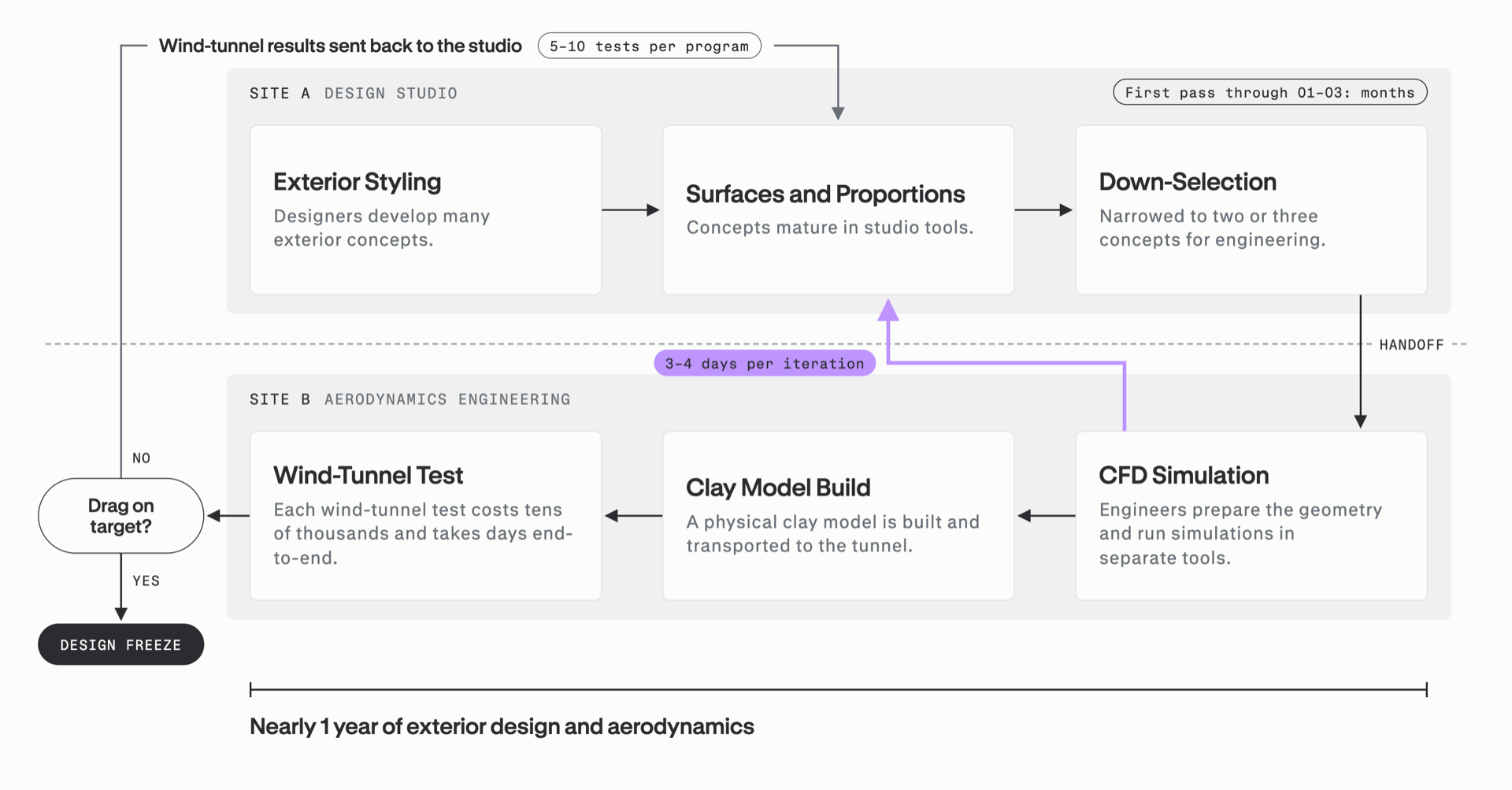
For one Luminary customer, a global automotive OEM, that separation was built into the workflow. Its studio narrowed the exterior design to one or two approved concepts before handing them to an aerodynamics team at another location. The aerodynamics team evaluated the concepts against performance targets and identified surface changes, which the studio incorporated while preserving the approved design’s visual character. Each design-change iteration required three to four days for aerodynamic feedback, with the cycle repeating as designers and engineers refined the vehicle together.
At this OEM, exterior design and aerodynamics can consume nearly a year of a three-to-four-year vehicle program. A typical program goes through five to ten wind-tunnel tests, each requiring clay modeling, transport, and engineering time.
A virtual wind tunnel inside the design tool
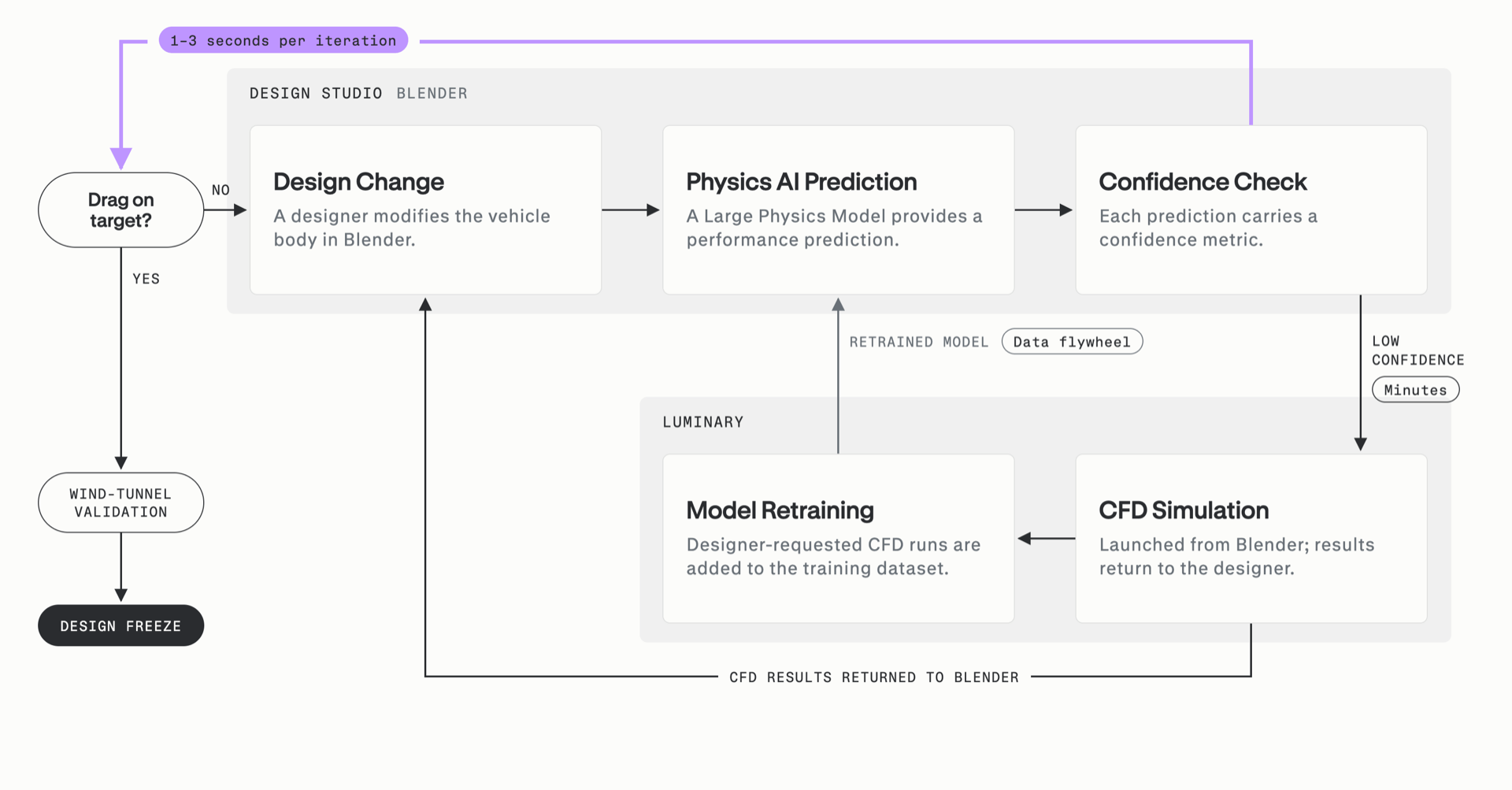
To address this, Luminary and the OEM moved aerodynamic analysis into the designers’ existing workflow. In Blender, a designer can modify a vehicle body and receive a prediction in seconds without switching applications or preparing the geometry for a separate tool.
The underlying Large Physics Model was trained on approximately 4,000 high-fidelity simulations for the relevant vehicle class and predicts aerodynamic performance within approximately 1% of CFD on a held-out validation set.
Critically, each prediction comes with a confidence metric. When the geometry is close to the model’s training data, the designer can view drag, surface pressure, and wall shear stress in Blender and continue iterating. When the geometry falls outside the training distribution, the tool avoids showing an unsupported prediction, flags low confidence, and lets the designer launch a CFD simulation from the same interface, with results available in a matter of minutes.
Each of these new simulation results is then added to the training dataset. As new samples become available, the model is retrained, improving its coverage of the shapes the studio is actively exploring.
The same closed-loop approach extends across programs. In SHIFT-Truck, high-fidelity CFD validates selected pickup-truck designs and supplies new data that can extend the model’s coverage into entirely different vehicle classes.
Results at a glance
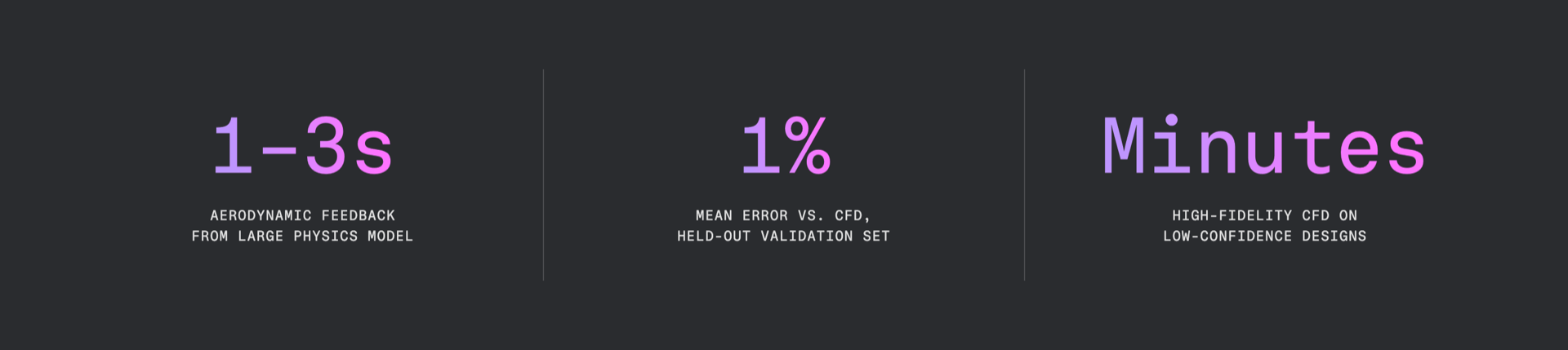
For geometry within the model’s training distribution, time to receive aerodynamic feedback drops from 3 to 4 days to 1 to 3 seconds. Low-confidence cases are routed to CFD from the same interface, and the completed simulations become training data for future predictions.
| Step | Current workflow | Virtual wind tunnel workflow |
|---|---|---|
| Aerodynamic feedback | 3 to 4 days per design-change iteration | 1 to 3 seconds |
| Design iteration | Repeated handoffs between the studio and engineering | Immediate feedback inside Blender |
| Unfamiliar geometry | Added to the engineering queue | Flagged automatically; CFD launched from Blender |
| Data flywheel | One answer for every simulation | Expanded with new designer-requested CFD runs |
From downstream validation to continuous design guidance
In the traditional workflow, designers shape the vehicle first and engineers evaluate its aerodynamic performance later. A small number of mature concepts are evaluated, each design change creates another handoff, and wind-tunnel testing can reveal problems after the design has become difficult to change.
With Physics AI, aerodynamics becomes a continuous design input. Designers can explore form and performance together, receiving immediate predictions for familiar geometries without leaving their preferred design tool. When the model encounters unfamiliar geometry, confidence signals route the design to high-fidelity CFD. Those simulations answer the immediate question while expanding the training data for future predictions.
The result is a fundamentally different operating model: designers retain more freedom to explore, CFD engineers focus their expertise where it adds the most value, and physical testing validates strong candidates rather than repeatedly redirecting the design. Each simulation also improves the system’s ability to support the next decision, creating a virtual wind tunnel that becomes more capable as it is used.
For automotive leaders, this shift means more than faster aerodynamic feedback. It can compress concept-to-validation cycles, reduce the risk of late-stage redesign, and allow teams to evaluate more concepts without a proportional increase in engineering effort. By reserving CFD and wind-tunnel capacity for the designs that need it most, the virtual wind tunnel turns aerodynamics into a lever for development speed, resource efficiency, and vehicle performance.
You can experience this workflow on an open reference vehicle in the interactive Physics AI demo, or talk to a Physics AI expert about bringing a virtual wind tunnel into your design studio.
See Physics AI in action
Register for the upcoming SHIFT-Truck webinar to see how a Large Physics Model accelerates aerodynamic design, and join Luminary’s Physics AI Dev Day to learn about the latest in Physics AI research and technology.