The Automotive CFD Prediction Workshop (AutoCFD) is one of the most important benchmarks in the industry for validating next-generation CFD tools for automotive external aerodynamics applications. Now in its fourth edition, it brings together top OEMs, researchers, and vendors to compare simulation results against wind tunnel data using standardized geometries and boundary conditions.
Founded in 2019, Luminary is a massively scalable, cloud-native simulation platform that combines GPU-native solvers, automated workflows, and intuitive browser-based access to enable engineers to run high-fidelity CFD simulations in minutes, not hours or days, and run hundreds of simulations in parallel to perform design exploration, optimization, and physics AI model training.
For Luminary, this was the company’s first time participating in the workshop. It was a chance to demonstrate not only solver accuracy, but also the power of the platform to deliver results at unprecedented speed and scale. In fact, Luminary was highlighted as the fastest solver of any entry at the workshop, as measured by wall time per convective time unit (CTU).
Cracking the DrivAer challenge
A central theme at AutoCFD has been the challenge of accurately predicting bluff body aerodynamics—problems with large separated flow areas and unsteady wakes that are notoriously difficult for traditional RANS models to capture. Many participants, including Luminary, have shifted toward scale-resolving methods like Delayed Detached Eddy Simulation (DDES), which offer better fidelity but demand high-quality meshes, low-dissipation numerics, and far more computational horsepower.
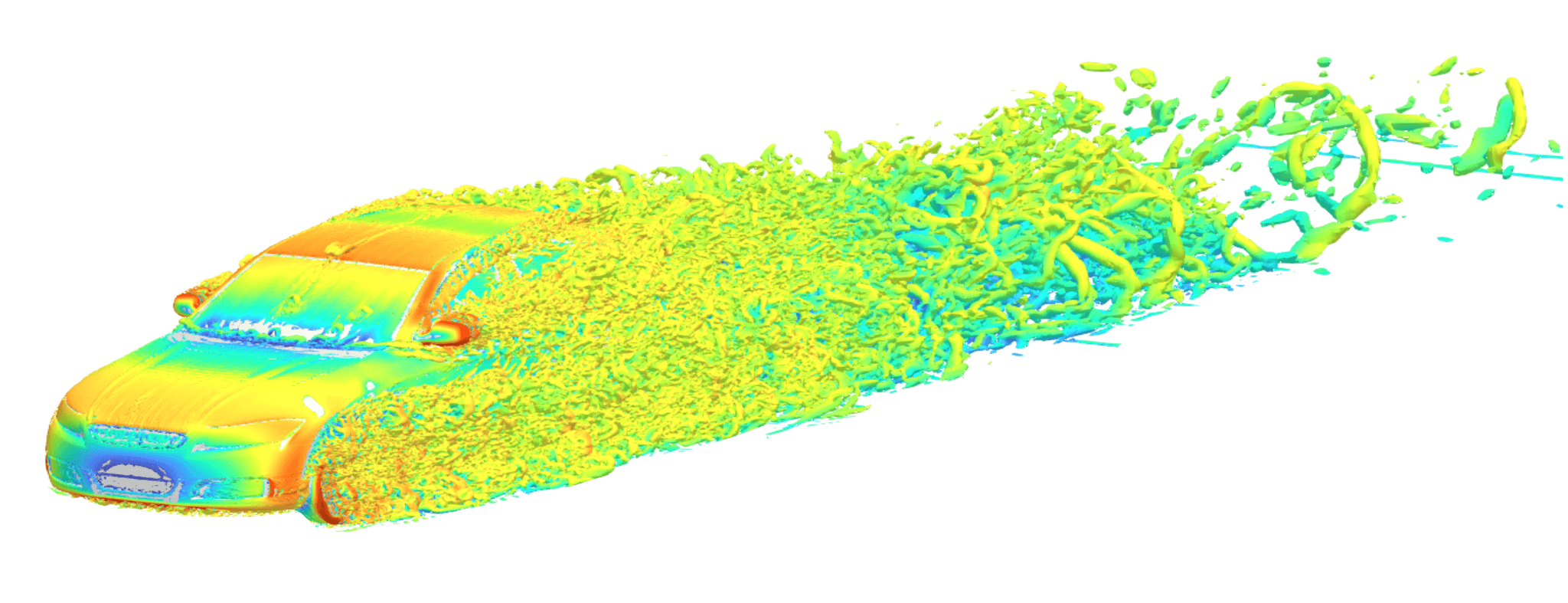
Figure 1. Visualization of an isosurface of Q-Criterion for DrivAer case 2a.
At AutoCFD4, the DrivAer Notchback model was used as a representative case that has been heavily validated against experimental testing. The case poses three core challenges:
- Predict the aerodynamic differences between a baseline vehicle and one with a front wheel deflector.
- Resolve transient flow features and wake structures using scale-resolving methods.
- Match wind tunnel results across key force coefficients and flow profiles with high fidelity.
Luminary addressed all three with its integrated platform:
Using workshop-provided grids, Luminary simulated both vehicle configurations with a DDES model enhanced by a shear-layer adapted length scale and vortex tilting measure (VTM) to mitigate grey area transitions between the RANS and LES regions. The solver employed the Spalart-Allmaras (SA-DDES) turbulence model, paired with an advanced shielding function to protect attached boundary layers and minimize modeled stress depletion.
The simulations used a second-order finite volume method with support for arbitrary polyhedral meshes and second-order implicit time integration. It is well known that standard upwind methods can introduce too much numerical dissipation in the LES regions of DDES calculations, adversely affecting accuracy. Therefore, Luminary applied a hybrid convective scheme—selectively blending centered and upwind formulations on a local basis—to preserve LES accuracy while also providing robustness in RANS regions. Each run began with a steady-state RANS initialization, followed by transient analysis at a fixed 2e-4 s timestep across 20,000 steps (6.25 seconds of physical time). Final results were averaged over the last 3.6 seconds. Refinement studies at 1e-4 s showed negligible impact on the results, demonstrating low time step sensitivity for this case.
Leading accuracy, rigorously validated
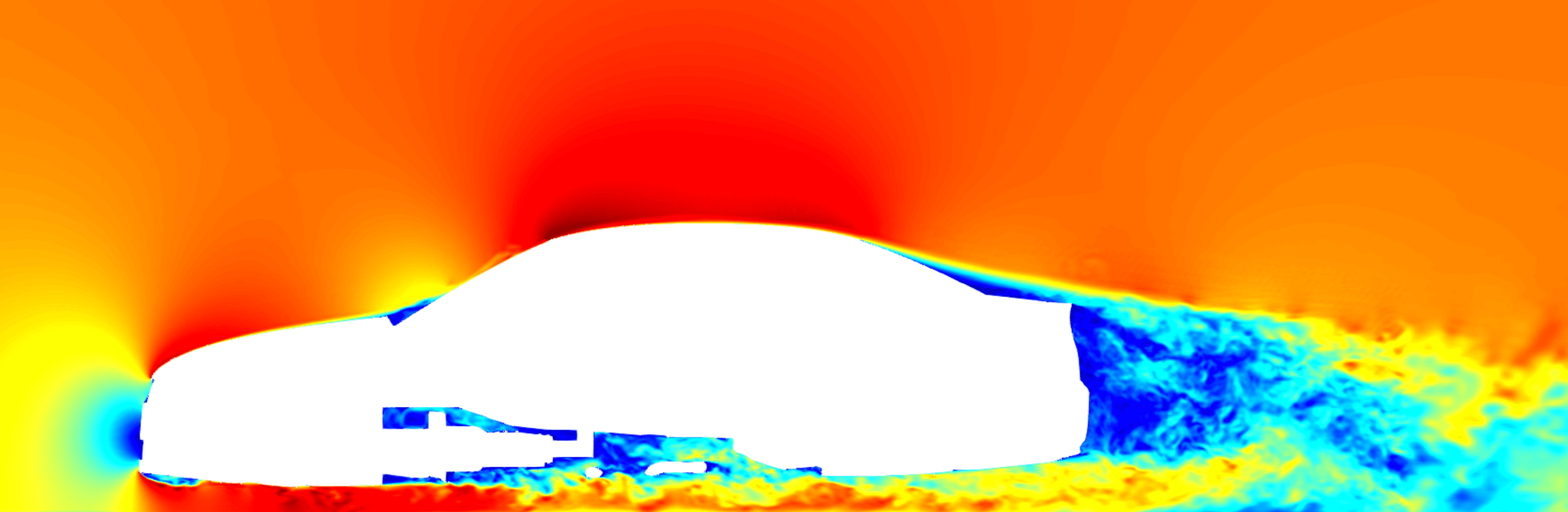
Figure 2. Instantaneous Velocity Magnitude - Range 0-50 m/s.
The workshop emphasized validating simulation predictions against wind tunnel tests, making the differences in time-averaged force coefficients (Drag Coefficient (CD), Lift Coefficient (Cl), Lift Coefficient - Front (Clf), Lift Coefficient - Rear (Clr)) key indicators of solver accuracy and precision. Table 1 below highlights Luminary’s results compared to experimental data.
| Cd | Cl | Clf | Clr | |
|---|---|---|---|---|
| Luminary 2a | 0.2768 | 0.0276 | -0.06948 | 0.097209 |
| Luminary 2b | 0.2669 | 0.0352 | -0.06212 | 0.097355 |
| Luminary ∆ b-a | -0.0099 | +0.0076 | +0.0074 | +0.00015 |
| Experiment ∆ b-a | -0.0122 | -0.0056 | +0.0038 | -0.0094 |
*Table 1. Luminary’s values and deltas are as good or better than other scale resolving simulation (SRS) CFD submissions from AutoCFD3 and AutoCFD4.
- The results showcased Luminary’s ability to replicate experimental outcomes with exceptional accuracy. At the vehicle’s centerline, pressure coefficient (Cp) distributions in Fig. 3a demonstrated near-perfect alignment with wind tunnel measurements, even in challenging regions such as the upper body surface above the trunk where early separation on the rear windshield can lead to discrepancies compared to experiment.
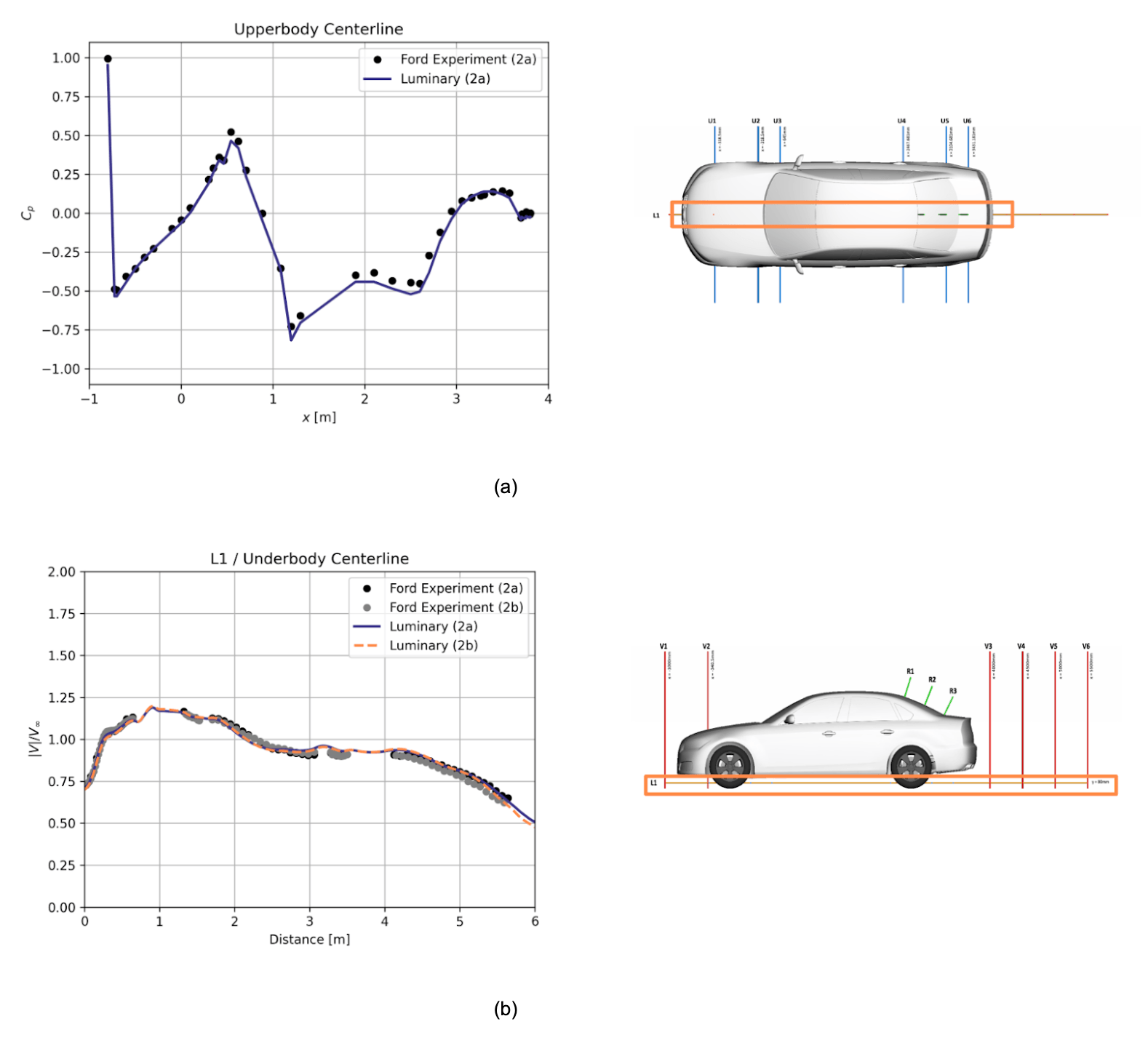
Figure 3. Excellent agreement with experimental results for pressure and velocity profiles at the (a) upperbody and (b) underbody centerline.
Velocity profiles downstream of the front wheel deflector, as seen in Fig. 4, highlighted Luminary’s ability to resolve subtle but important aerodynamic effects, including flow features in the tire wake and modified underbody flow. These changes were captured with high fidelity and aligned closely with experimental observations. The deflector helped reduce drag by managing flow separation and redirecting turbulent structures—demonstrating how small geometric changes can yield meaningful aerodynamic benefits. Luminary’s accurate resolution of these effects showcases its predictive capabilities for complex, transient flow physics.
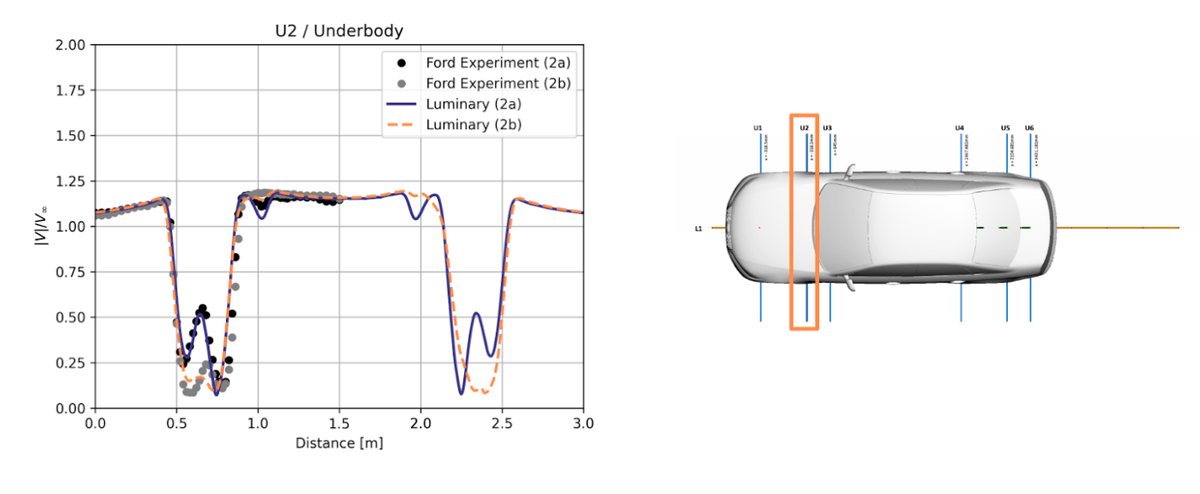
Figure 4. The effect of the front wheel deflector (FWD) is clearly visible in the tire wake profiles.
Velocity profiles at several locations downstream in the wake of the vehicle were also compared to experiment. Interestingly, while the match with experimental results may initially appear imperfect—particularly in the V5 wake profile (shown in Fig. 5)—this trend was consistent across nearly all CFD submissions at the workshop. This sparked healthy debate among participants about whether discrepancies were due to shortcomings in the numerical models or anomalies in the experimental data itself. While no consensus was reached, the consistency among simulation results, including Luminary’s, suggests strong underlying agreement and raises important questions that could be addressed by the community in future workshops.
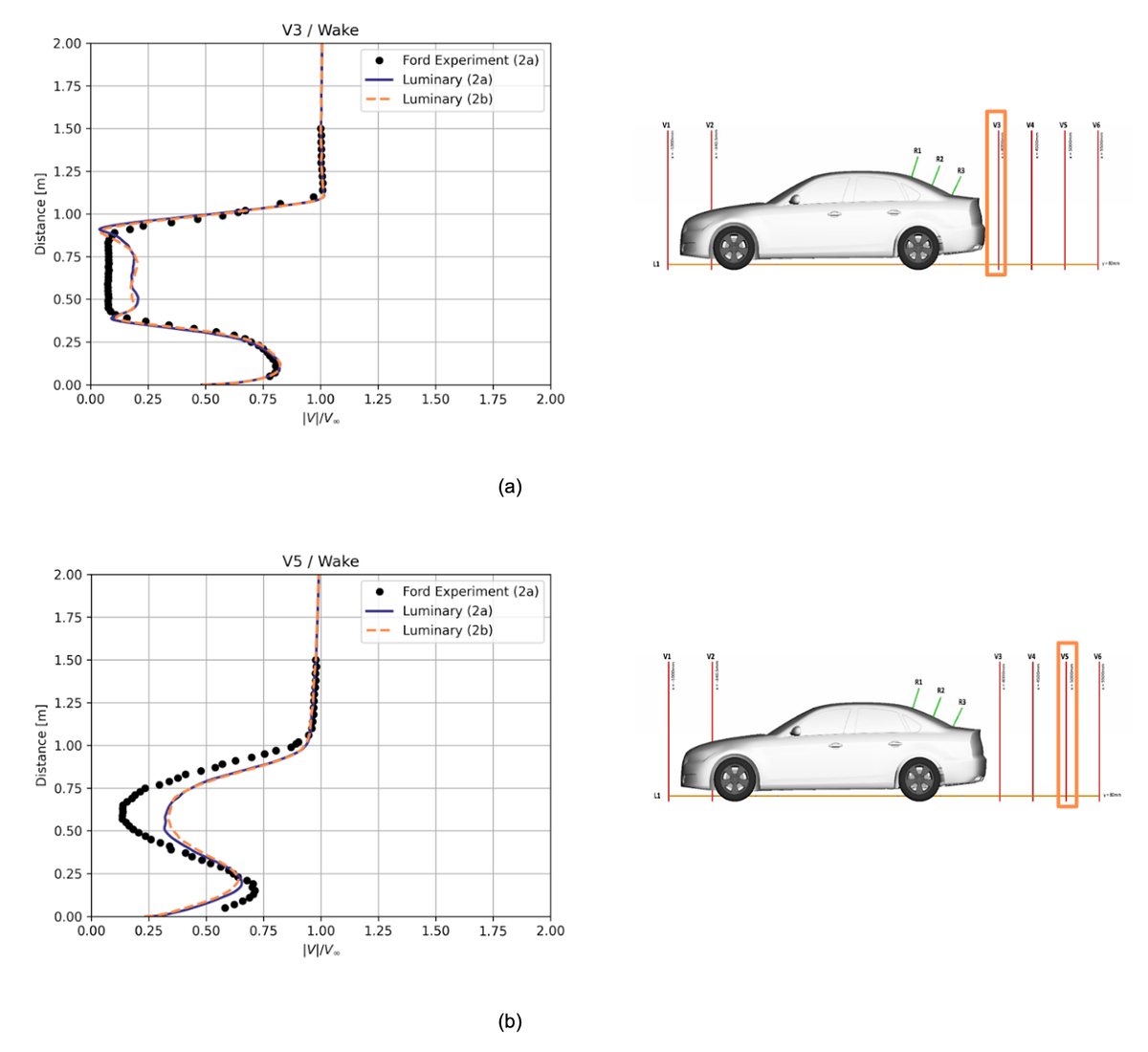
Figure 5. Excellent agreement of wake profile with experiment, showing attached flow along upper centerline at (a) V3 and (b) V5.
Time step sensitivity studies demonstrated robust performance across different resolutions. Even when the fixed time step was reduced from 2e-4 s to 1e-4 s, shown in Fig. 6, the results showed minimal variation.
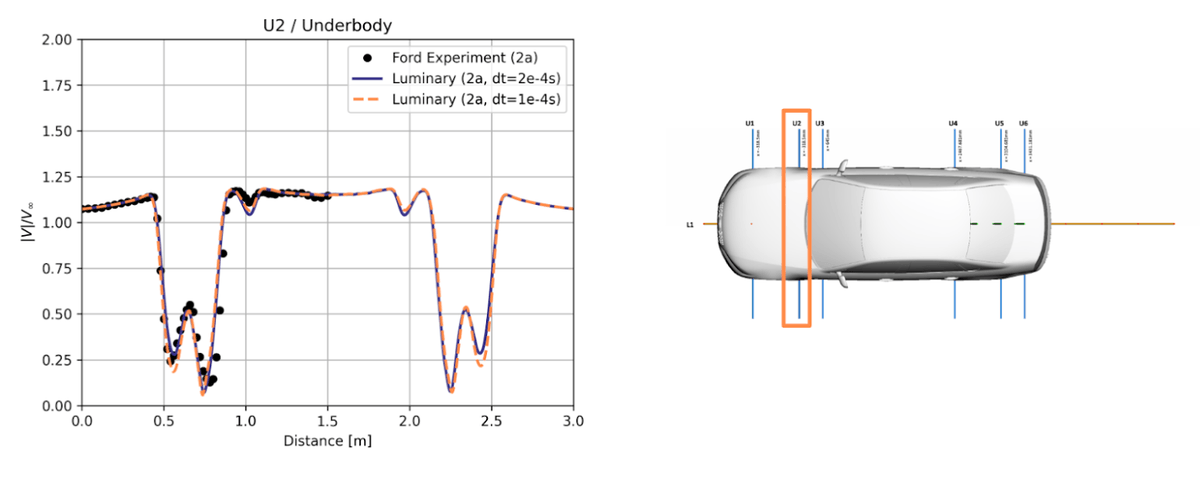
Figure 6. Similar results obtained under time step refinement at U2 / Underbody
The shielding function is a critical component of any DDES model. Without careful treatment, it’s easy to trigger non-physical early separation, leading to inaccurate results. The rear windshield in AutoCFD4 is a textbook case: without appropriate shielding, the flow can detach prematurely on the rear window along the centerline, which then manifests in downstream velocity profiles (e.g., R3 and beyond). To avoid this, Luminary invested heavily in its shielding implementation, ensuring attached boundary layers are properly protected on a variety of test cases across various flow regimes. Fig. 7 contains both instantaneous and time-averaged view of wall shear stress contours on the upper surface of the car, showing that the flow remains attached along the upper centerline of the vehicle.
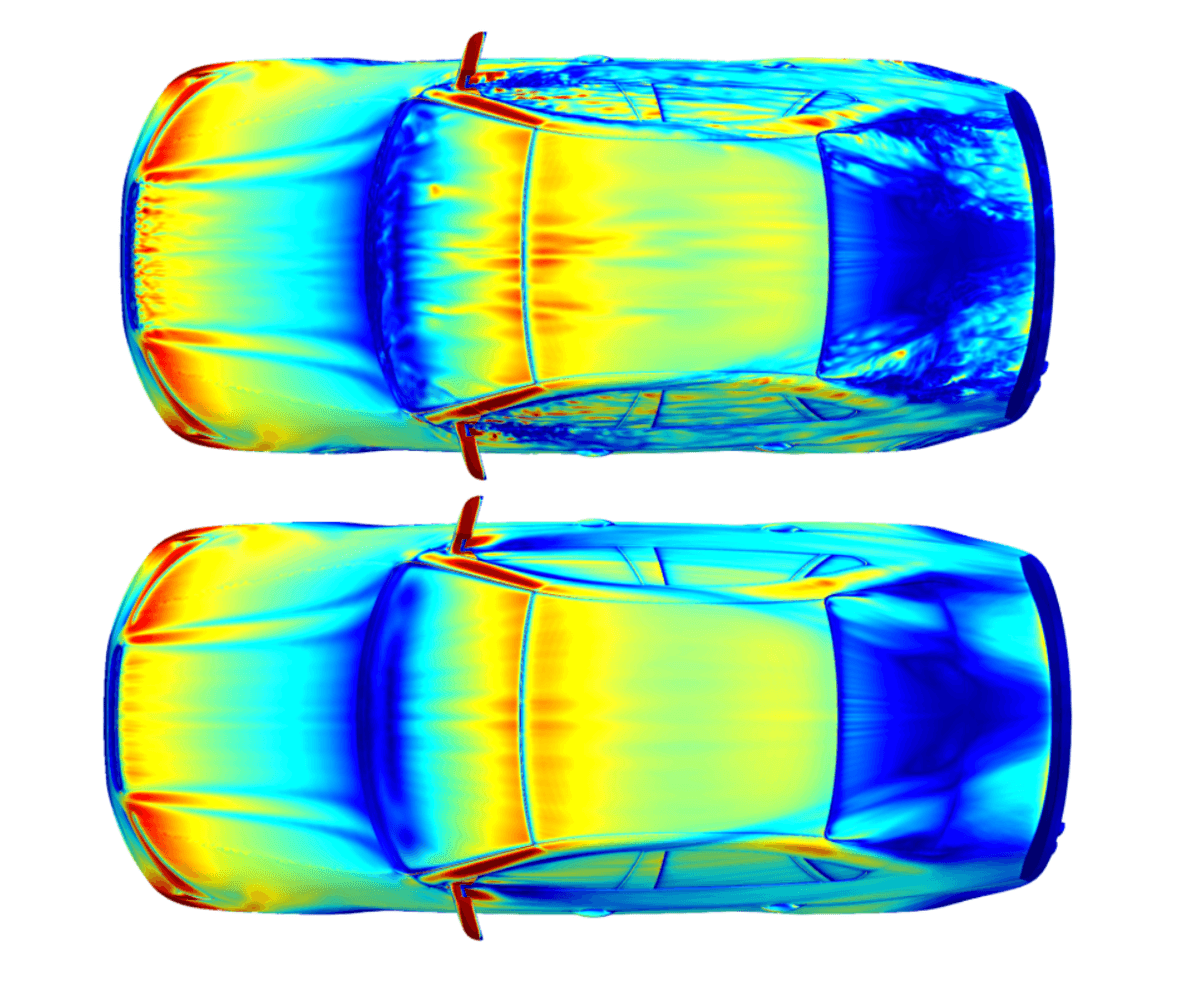
Figure 7. Wall Shear Stress - Instantaneous (upper), Average (lower). Range 0-6 N/m2.
These validation exercises demonstrated that Luminary’s solver not only held its own against the field—it consistently matched or outperformed other participants across key metrics. From time-averaged forces to detailed wake structures and pressure profiles, Luminary’s results reinforced its credibility as a high-accuracy CFD solution for automotive aerodynamics. See how Luminary (ID22_Other_v1) compares to other submissions via the interactive workshop dashboard.
Blazing fast performance
Where Luminary also stood out was in its performance metrics. The 4th Automotive CFD Prediction Workshop (AutoCFD4) emphasized the importance of transient, turbulence-resolving simulations for standardized automotive geometries, and Luminary exceeded expectations.
![Figure 8. Wall time per CTU [s] comparison of anonymous workshop submissions (Owen)](/_vercel/image?url=_astro%2Fscreenshot-2025-04-03-at-9.15.36-am-5Nsv1LKHoyp17krTs2AFIr.DuX5OJgr.png&w=1200&q=100)
Figure 8. Wall time per CTU [s] comparison of anonymous workshop submissions (Owen)
Running the DrivAer simulations on a 157-million-cell mesh, the team completed a full 6.25-second transient analysis in just 93 minutes using 48 NVIDIA A100 GPUs. This translates to less than 3 minutes per convective time unit (CTU), a benchmark highlighted in the workshop’s summary as the fastest GPU-based entry. Fig. 8, taken from the presentation by session chair Herbert Owen, Senior Researcher in the Department of Computer Applications in Science and Engineering at the Barcelona Supercomputing Center, illustrates these results from the conference. When leveraging 64 NVIDIA H100 GPUs, this runtime was slashed to an impressive 44 minutes.
Initial tests on NVIDIA B100 GPUs have already demonstrated 2x performance improvements beyond the fastest numbers obtained using NVIDIA H100 GPUs, completing the same simulation in 15–20 minutes! These solve times are shifting the role of scale resolving CFD from a periodic design checkpoint to a daily engineering tool.
Watch the full recording of our presentation at AutoCFD4 below to learn more.
Driving the future of CFD
As the automotive industry pushes the boundaries of what’s possible, Luminary is reshaping the landscape. By combining accuracy, speed, and scalability, Luminary empowers engineers to tackle problems at a speed and scale that was previously impossible.
To learn more about Luminary’s platform, visit luminary.ai.