
The aviation industry faces an unprecedented challenge: despite efforts to reduce its environmental impact, aviation emissions are rising faster than those from rail, road, or shipping. While Sustainable Aviation Fuel promises an 80% reduction in flight emissions, it will account for just 0.53% of jet fuel use in 2024 - far short of what’s needed for aviation’s goal of net-zero emissions by 2050. In response to this pressing challenge, aerospace engineers are revisiting an innovative concept that could revolutionize commercial flight. The blended wing body (BWB) aircraft represents the most significant departure from conventional aircraft architecture since the dawn of commercial aviation.
A military design finds commercial wings
The blended wing concept emerged in the 1990s through pioneering work at McDonnell Douglas. While the design proved successful in military applications like the B-2 bomber, commercial aviation largely overlooked its potential. NASA’s experimental X-48 program later validated the concept between 2007 and 2012, completing approximately 120 test flights that demonstrated reduced noise and emissions compared to conventional aircraft. Now, with mounting pressure to reduce aviation’s environmental impact, a new generation of aerospace companies is working to bring this revolutionary design to commercial aviation.
Breaking free from traditional aircraft design
San Diego-based Natilus has emerged as a leading innovator in the development of BWB aircraft, with ambitious plans to revolutionize commercial aviation in both the cargo and passenger segments. The company’s CEO and co-founder, Aleksey Matyushev, explains the fundamental advantage of their approach: “In a traditional tube and wing airplane, the wing carries about 90% of the lift and the fuselage about 10% of the lift. There’s a lot of inefficiency in that. The BWB marries the two together, where the fuselage actually contributes 50% of the lift…creating a more aerodynamic shape of the airplane, reducing drag, and improving the overall operational efficiency.”
The BWB design delivers multiple compounding benefits that address the aviation industry’s most pressing challenges. By better integrating the fuselage and wing, the aircraft achieves more lift and therefore can utilize smaller engines which will reduce fuel consumption by 30% while simultaneously providing 30-40% more usable interior space. This extra volume doesn’t come at the cost of airport compatibility - the aircraft still fits standard gates and terminals. The combined effect of better aerodynamics and structural efficiency means the aircraft can deliver the same passenger capacity with half the emissions of current narrow-body aircraft.
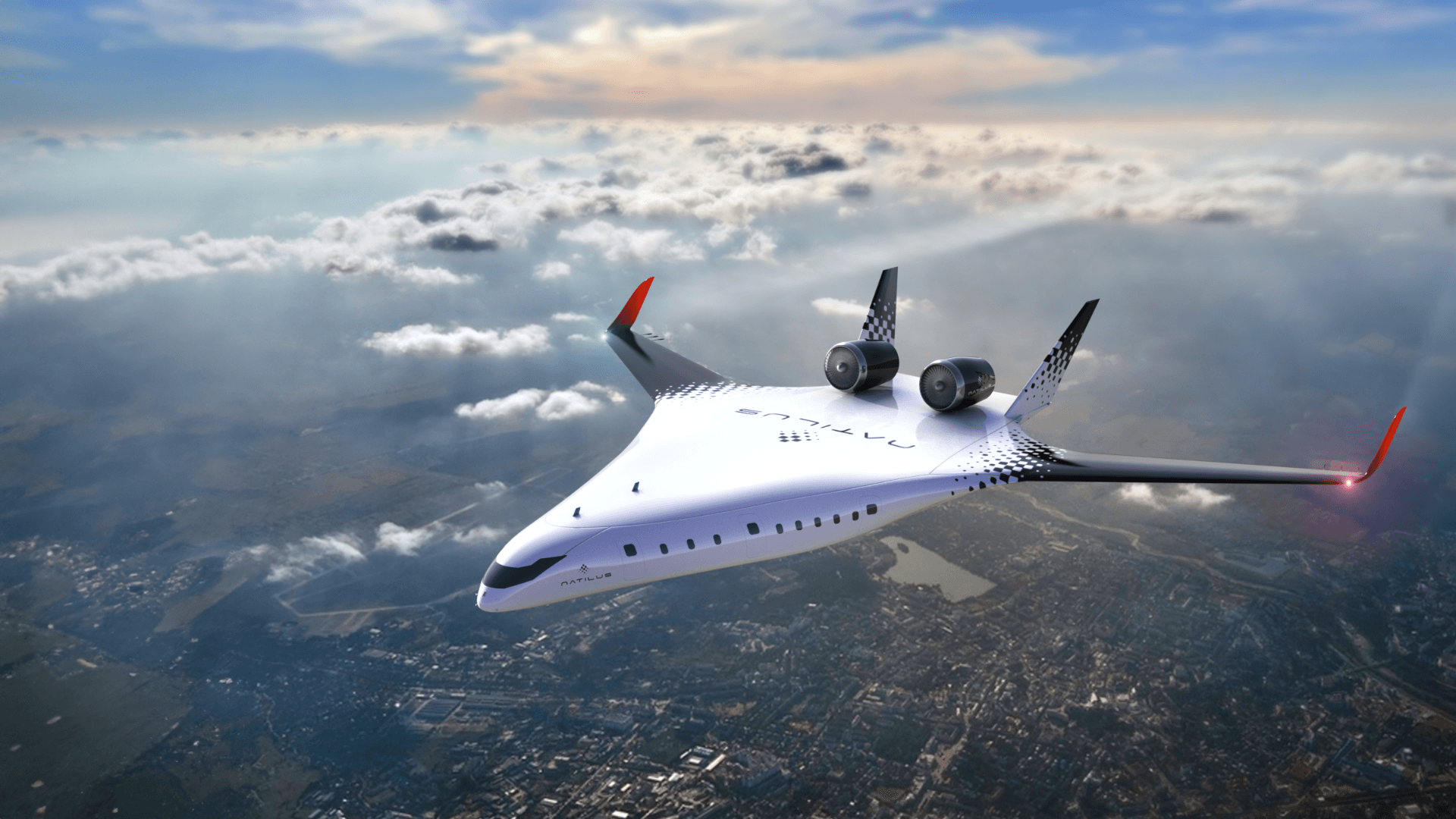
Natilus Horizon rendering
Accelerating innovation through advanced simulation
For a startup developing revolutionary aircraft designs, computational fluid dynamics (CFD) plays a crucial role. “As a young company producing and selling large aircraft,” Matyushev notes, “we need to give airlines complete confidence in our designs before they’re built. This means thoroughly understanding every aspect of the aircraft’s performance - from how efficiently it generates lift to how it minimizes drag during flight.”
Natilus leverages Luminary Cloud’s advanced CFD capabilities to evaluate and optimize their aircraft designs. The process begins with importing CAD models into Luminary’s unified platform.
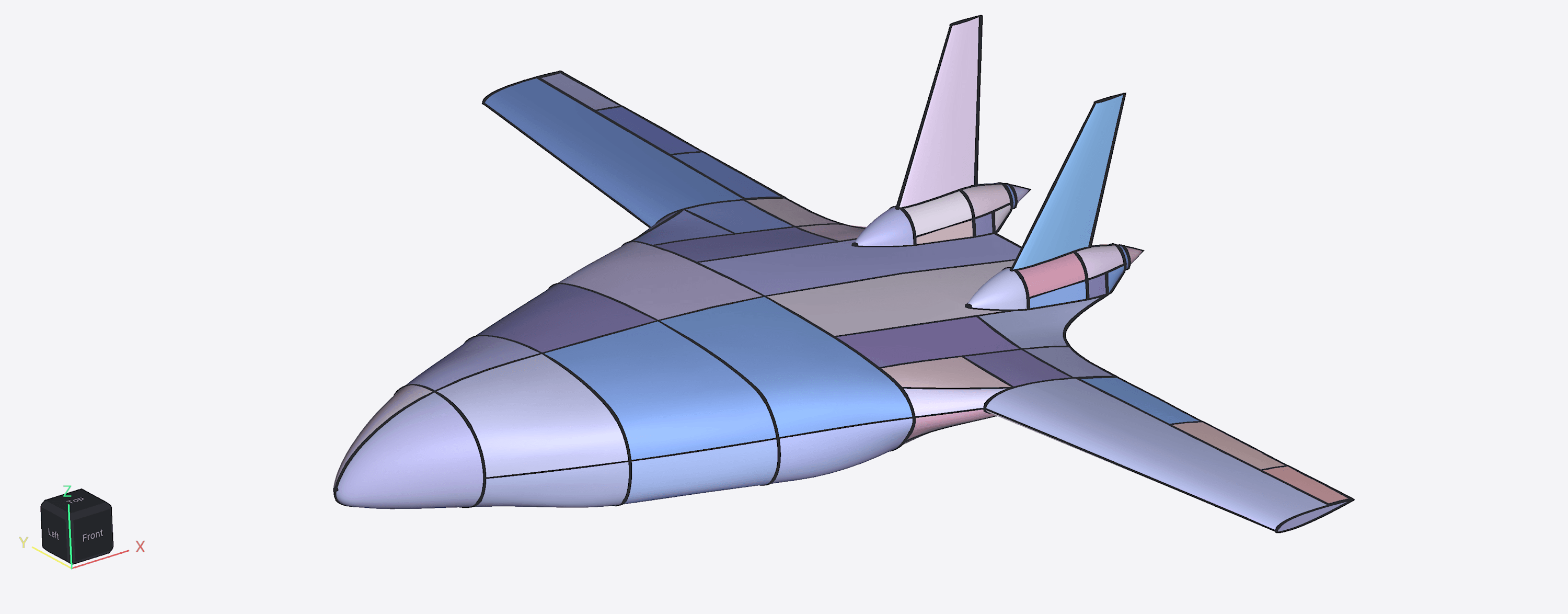
CAD model of Natilus’ Kona aircraft in the Luminary Cloud platform
“What really gets us excited about Luminary is the ease of use,” Matyushev enthuses. “Specifically taking the meshing task to an automated turnkey solution for us.”
The platform automatically divides the aircraft’s surface and surrounding airspace into millions of tiny cells for analysis - a process called meshing - with minimal engineer input needed.
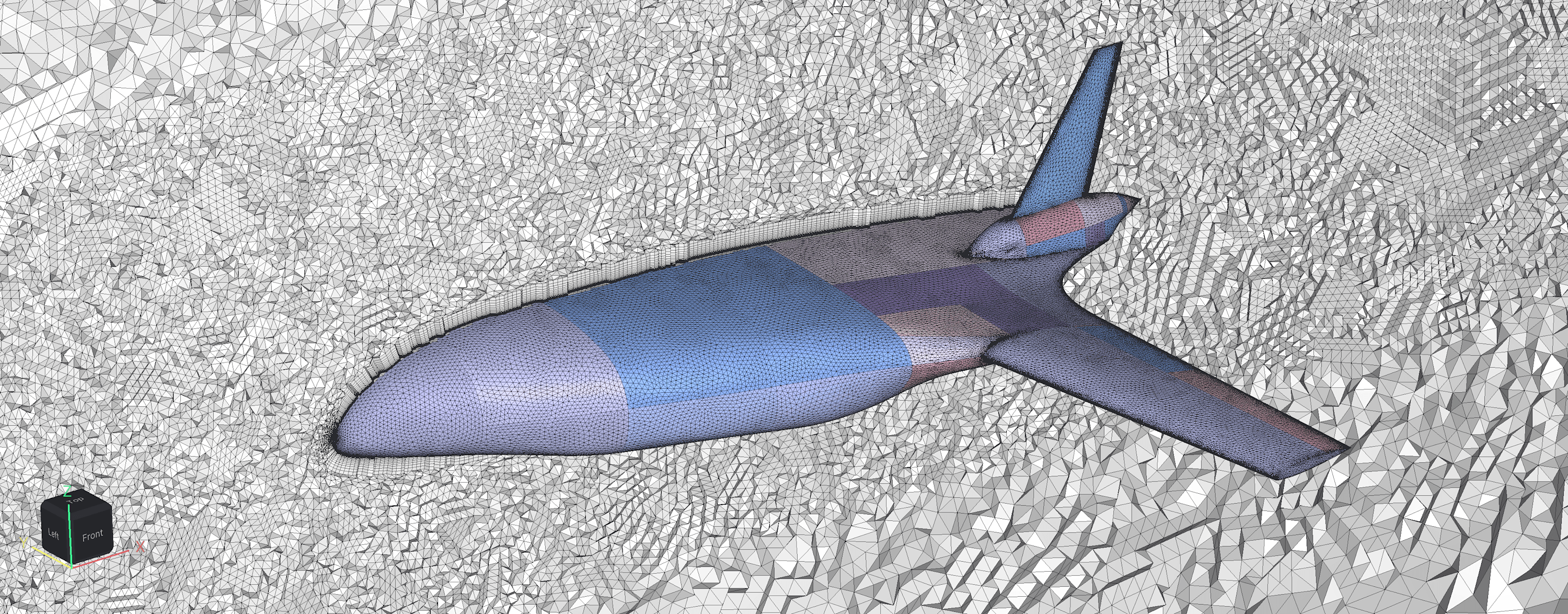
Mesh of the Kona surface and the surrounding air
The speed and automation of Luminary enables rapid testing of design variations, dramatically accelerating the development process. The efficiency gains are striking. “Usually a solution for us would take 6-8 hours to mesh. With Luminary that is now down to 5-6 minutes” notes Matyushev. The platform’s GPU-native solver can generate a high-accuracy solution for the Kona aircraft’s 50-million-cell mesh in just 6 minutes on eight Nvidia A100 GPUs, all managed through an intuitive unified interface.
Beyond raw performance, Luminary’s cloud-native architecture eliminates the traditional barriers of on-premise hardware infrastructure. Teams can instantly access powerful GPU resources from anywhere, scaling computing power up or down based on project demands. This flexibility is particularly valuable for innovative startups like Natilus who need enterprise-grade simulation capabilities without the overhead of maintaining physical hardware.
We don’t need to build and maintain our own supercomputer cluster. Instead, we can instantly scale our simulation capacity up during intensive design phases and scale it back down when we need fewer resources - paying only for what we use.
— Aleksey Matyushev, Natilus CEO and co-founder
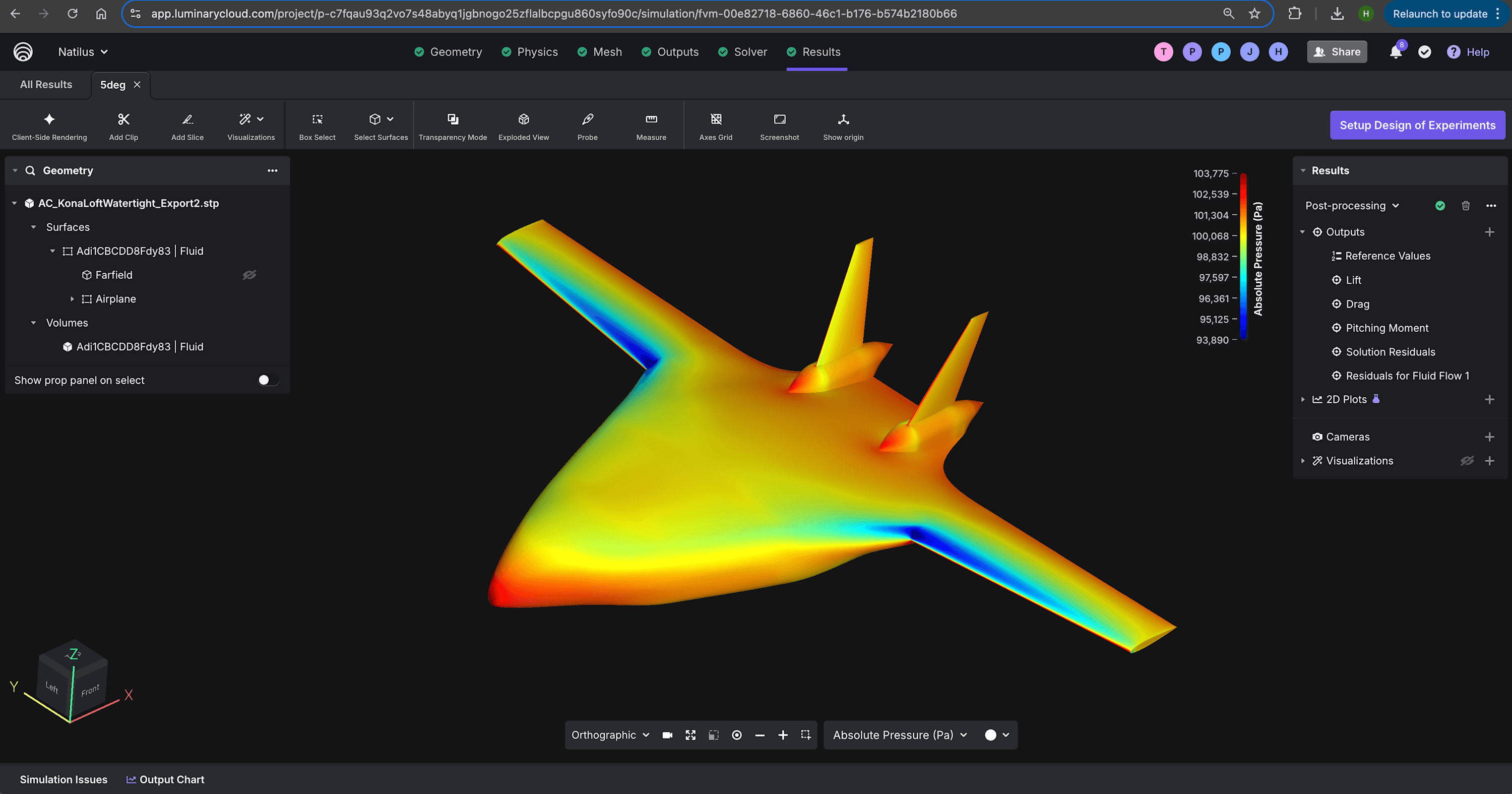
The entire workflow from CAD import to solution post-processing is done entirely in a browser-based UI
The accuracy of Luminary’s simulations has been rigorously validated against real-world testing. Wind tunnel tests of the Kona aircraft have demonstrated strong correlation with Luminary’s computational predictions, providing confidence in the platform’s reliability for design optimization.
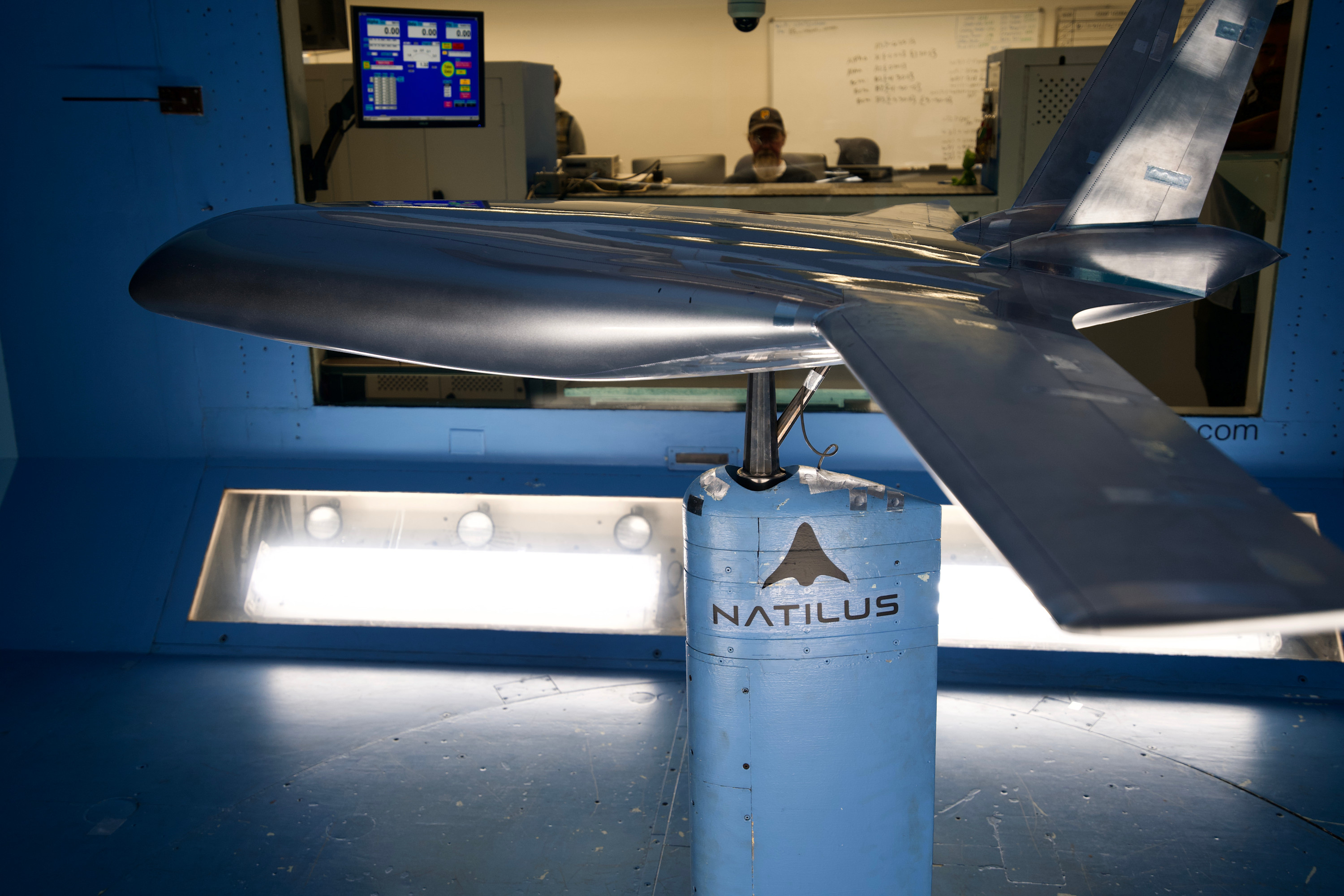
Wind tunnel tests of the Kona aircraft
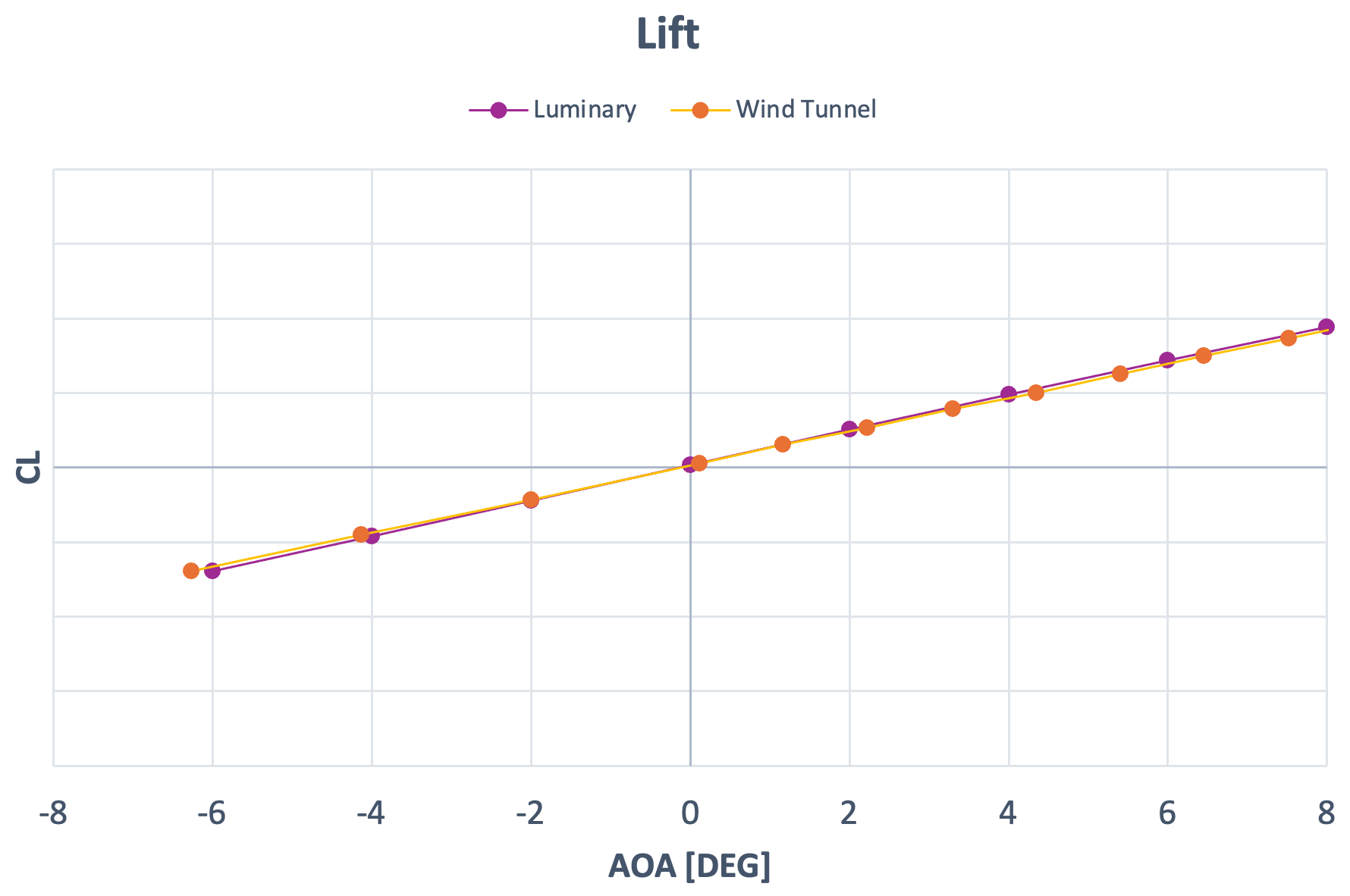
Luminary solution on the Kona compares well against wind-tunnel data
Shaping aviation’s future
For Natilus, competing with industry giants as a startup requires innovative approaches to aircraft development. “Being a young startup going against incumbents there’s a lot of challenges we have,” Matyushev acknowledges. “Having scalable solutions that allow our team to move faster to compete against these giants is very important.”
With their cargo aircraft Kona beginning full-scale testing within two years, Natilus is poised to bring BWB aircraft from concept to reality. Their ambitious timeline for the 200-passenger Horizon aircraft demonstrates their commitment to transforming commercial aviation - offering airlines a practical path to reduce emissions through aerodynamic innovation rather than waiting for future fuel technologies. Advanced simulation capabilities have been crucial to this journey, enabling the company to rapidly iterate and validate their designs. As Matyushev explains, “We can analyze more design options in less time, testing different parameters and configurations. This accelerates our development timeline significantly - something our customers see as a huge advantage.”
To learn more about how Luminary Cloud helps innovative aerospace companies reshape the future of flight, sign up for a free trial today at luminarycloud.com

